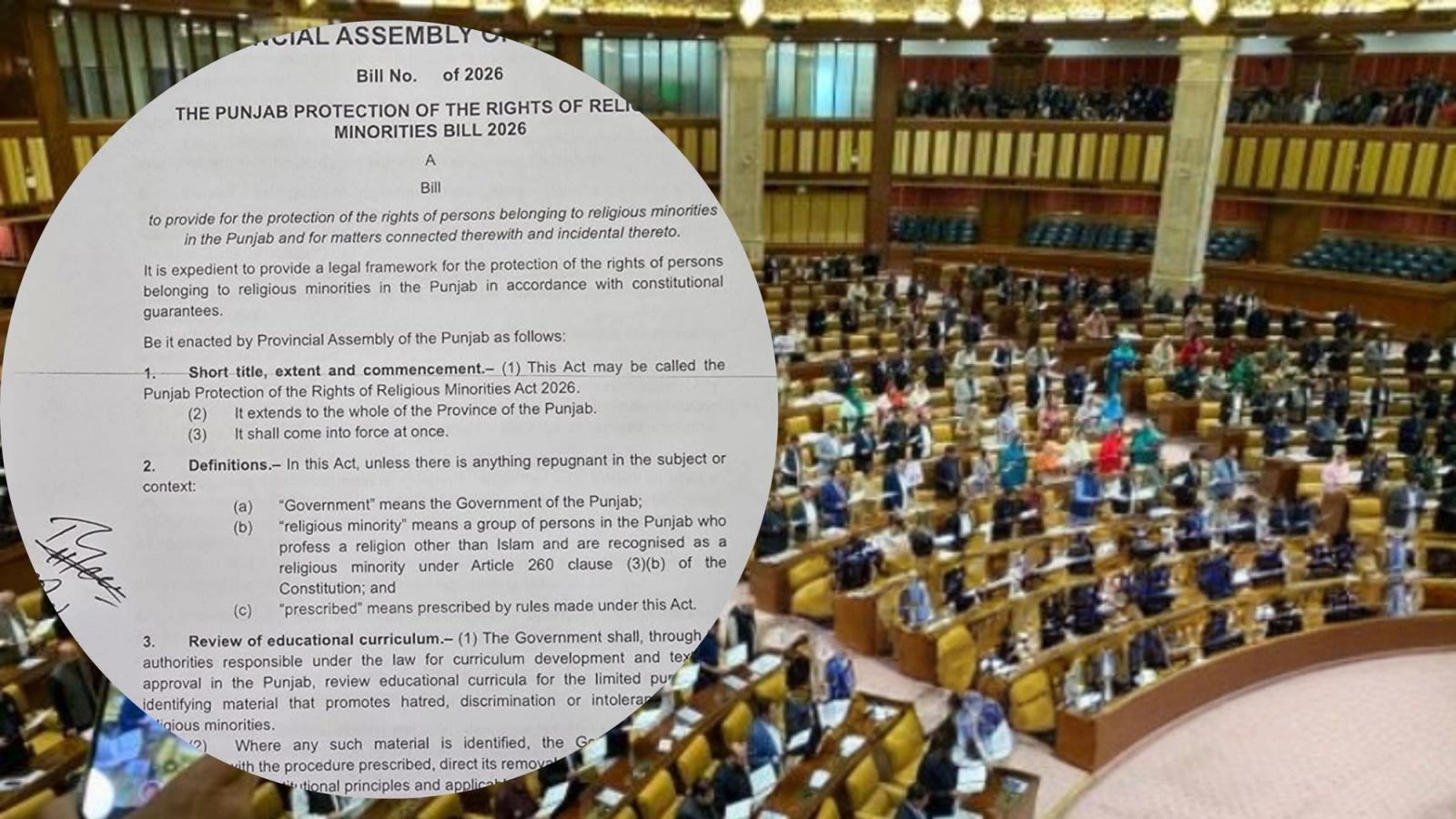
A new legislative development in Punjab has brought fresh attention to minority rights in Pakistan, as the Punjab Minorities Rights Protection Bill 2026 has been formally submitted to the Provincial Assembly. The bill was introduced as a private member initiative by Philbous Christopher, Chairman of the Standing Committee on Minority Affairs, and is already being seen as a significant step in an ongoing and sensitive national conversation.
This development comes at a time when minority communities, particularly Christians, are closely following recent legal and judicial changes. In a previous report, it was highlighted that Pakistan’s constitutional court issued a ruling allowing Muslim men to marry women from “Ahl-e-Kitab,” including Christians. While the decision was grounded in religious interpretation, it sparked concern within sections of the Christian community, with many expressing unease about its possible social implications.
Against this backdrop, the introduction of the Punjab Minorities Rights Protection Bill is being viewed by some as a responsive move — an attempt to address longstanding concerns related to forced conversions, coerced marriages, and broader issues of discrimination faced by minority groups.
According to the details circulating in early discussions, the proposed legislation seeks to criminalize forced religious conversions and forced marriages involving minority individuals. It outlines strict penalties, including imprisonment and fines, for those found guilty of such acts. For many observers, this aspect of the bill directly addresses one of the most frequently raised concerns by human rights organizations and minority advocates in recent years.
In addition to tackling forced conversions and marriages, the bill also proposes measures aimed at reducing discrimination in educational institutions and workplaces. It emphasizes equal treatment for minority citizens and calls for stronger enforcement mechanisms to ensure that their rights are protected in both public and private sectors.
Another key feature of the proposed legislation is its focus on safeguarding places of worship belonging to minority communities. Protection of churches, temples, and other religious sites has been a recurring demand, particularly following incidents in which such locations have been targeted during periods of unrest.
The bill further includes provisions for reviewing the educational curriculum at the provincial level. The objective of this review is to identify and address any content that may promote bias, intolerance, or hate toward minority communities. This element reflects a broader understanding that long-term social harmony is closely linked to education and the narratives presented to younger generations.
While the bill is still in its early stages within the legislative process, its introduction has already generated discussion across social and political circles. Some view it as a constructive and necessary step toward strengthening minority protections, especially in light of recent debates surrounding interfaith marriage and legal interpretations. Others emphasize that the true impact of the bill will depend on its implementation, enforcement, and the political will behind it.
For Pakistan’s Christian community, as well as other minority groups, the timing of this development is particularly significant. Coming shortly after a high-profile judicial decision, the bill is being interpreted by some as part of a broader shift toward addressing minority concerns more directly. It also reflects the growing role of minority representatives in raising these issues within formal legislative platforms.
At the same time, it is important to note that public reaction remains mixed. While many welcome the proposed safeguards, questions remain about how effectively such measures can be enforced on the ground. Past experiences have shown that the gap between legislation and implementation can be a critical factor in determining real-world outcomes.
Nevertheless, the introduction of the Punjab Minorities Rights Protection Bill 2026 marks an important moment in Pakistan’s ongoing dialogue around human rights, religious freedom, and social inclusion. It highlights both the challenges that persist and the efforts being made to address them through legal and institutional frameworks.
As the bill moves through the legislative process, attention will remain focused on how it evolves, what amendments may be introduced, and ultimately, whether it can deliver meaningful protection for minority communities across Punjab and beyond.
News | Pakistan
Punjab Minority Rights Bill 2026 Introduced Amid Debate Over Interfaith Marriage in Pakistan
Punjab submits Minority Rights Protection Bill 2026 to criminalize forced conversions and marriages, as debates grow over court rulings on Muslim-Christian marriages in Pakistan.
Comments
Sign in to comment and follow the conversation.
Sign in to commentMore From News
Most Popular

Christian Persecution Explained: Where Faith Becomes Dangerous
Punjab Minority Rights Bill 2026 Introduced Amid Debate Over Interfaith Marriage in Pakistan
Rising Threats in Northern Nigeria Put Christians at Risk Ahead of Easter
Faith, Law, and Borders: Inside the Quiet Divide Among America’s Protestant Pastors
Pakistan Court Ruling on Muslim-Christian Marriage Sparks Debate Over Minority Rights

Monday - Thursday Reflection: The Silence, The Table, and The Cross
Trending
Christian Persecution Explained: Where Faith Becomes Dangerous
Punjab Minority Rights Bill 2026 Introduced Amid Debate Over Interfaith Marriage in Pakistan
Rising Threats in Northern Nigeria Put Christians at Risk Ahead of Easter
Faith, Law, and Borders: Inside the Quiet Divide Among America’s Protestant Pastors
Pakistan Court Ruling on Muslim-Christian Marriage Sparks Debate Over Minority Rights
Loading comments...